
Table of Contents
Sore muscles, stiff joints, and that heavy, worn-down feeling after a hard training week are all signs of inflammation doing its job, sometimes a little too enthusiastically. Cryotherapy has become one of the more popular ways to help the body settle faster, and at Thrive Aesthetics + Wellness in Watkinsville, GA, a full session takes about as long as brushing your teeth.
Here is what actually happens inside your body during those few minutes, why it is connected to lower inflammation, and what recovery realistically feels like afterward.
What does whole-body cryotherapy do for sore, inflamed muscles?
Whole-body cryotherapy exposes the body to extremely cold air for two to three minutes, which sends blood toward the core and then back out to the arms and legs once the session ends. Many people use that circulatory response as cold therapy for recovery, helping calm post-exercise soreness so they feel ready sooner.
What Whole-Body Cryotherapy Actually Is
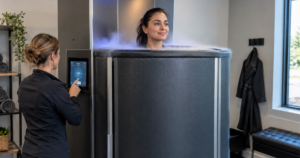
Whole-body cryotherapy is a brief, controlled exposure to supercooled air inside a standing chamber, with your head remaining above the opening. You stay in for two to three minutes, wearing dry clothing, gloves, and socks.
It is not an ice bath. There is no water, no wet cold soaking into your skin, and no fifteen minutes of gritting your teeth. It is also different from a cryofacial, which treats one area, or a cold pack on a single knee. At Thrive Aesthetics + Wellness, sessions use the Everest chamber by CryoBuilt, a system built for consistent temperatures and safety monitoring throughout. Worth saying plainly: this is a wellness and recovery therapy practice, not a treatment for a diagnosed medical condition.
How Cold Exposure Triggers the Body’s Inflammatory Response
Cold triggers a rapid circulatory shift, and that shift is the mechanism behind cryotherapy for inflammation. When your skin registers extreme cold, blood vessels near the surface narrow and blood moves inward toward your core, where your body protects its central temperature first.
Once you step out and warm up, the opposite happens. Vessels open back up and circulation returns to your arms, legs, and skin. That return flow is where people often describe a flushing or tingling sensation.
Research also suggests cold exposure influences inflammatory signaling in the body, though the evidence base is still developing and individual responses vary. The effect is systemic, meaning your whole body responds rather than one treated spot.
Why Less Inflammation Means Faster Recovery
Recovery speeds up when you manage excess inflammation, not eliminate it. Inflammation after a hard effort is normal and useful. It is part of how tissue repairs itself. The problem is when there is more than you need, and it lingers as soreness, stiffness, and a body that doesn’t feel ready.
That heaviness two days after a long run or a heavy lifting session is your body working through the repair process. Better circulation supports that work by moving oxygen and nutrients toward the tissue doing the rebuilding.
Most people describe the payoff in practical terms. Easier range of motion, less next-day stiffness, and being able to train again without dragging.
What a Session Feels Like and Why It Is So Short
The cold feels sharp but tolerable, mostly because it is dry. Dry air does not conduct cold into your skin the way water does, which is why a chamber session is measured in minutes while an ice bath is not.
Most people report the first thirty seconds being the biggest adjustment, then it becomes manageable. You step out, warm up with light movement, and go on with your day. The short window is the point, not a limitation.
Who Tends to Use Cryotherapy for Recovery
Cryotherapy suits people managing repeated physical load. Athletic recovery cryotherapy is common among runners, lifters, and anyone training consistently enough that the gap between sessions matters.
It also appeals to:
- People with persistent joint stiffness or physical strain from long shifts and demanding work weeks
- Anyone pairing it with a physical therapy or training program, with their provider aware of it
- Those who simply feel run-down and want a reset built into their week
Candidacy matters here. Circulatory or cardiovascular concerns need a conversation with a provider first, and cryotherapy is not appropriate for everyone.
What Cryotherapy Does Not Do
Cryotherapy supports recovery, it does not replace it. Sleep, hydration, nutrition, and actual rest days still do the heavy lifting. No cold session compensates for skipping them. It is also not a treatment for an injury and not a substitute for having ongoing pain evaluated. If something hurts in a way that is not improving, that deserves a real medical assessment.
The honest read on the evidence is that it is promising and still developing. Some people notice a clear difference, others notice less. We would rather tell you that upfront than oversell it.
How Often People Use It and Why Consistency Matters
Regular sessions tend to matter more than any single one. The cryotherapy benefits people describe are generally cumulative, building over weeks rather than arriving all at once. What that cadence looks like depends on your activity level. Someone training five days a week around Watkinsville trails may build sessions into their heaviest weeks. Someone on their feet all day may prefer a steady weekly rhythm. Our providers help set that pacing during your first visit.
Common Questions About Cryotherapy and Recovery
Does it hurt?
No, though it is intense. The dry cold feels sharp rather than painful, and most people adjust within the first minute.
How soon after a workout should I go?
Many people go within a few hours of training. Timing can be adjusted based on your goals.
Is it safe with a heart or circulation concern?
That requires a conversation with a provider first. Certain cardiovascular and circulatory conditions rule it out.
How does it compare to an ice bath?
Cryotherapy is shorter, dry, and covers the whole body. Ice baths are longer, wet, and harder for most people to stay consistent with.
Ready to Feel Recovered Instead of Just Rested
If soreness keeps setting the pace of your week, cryotherapy is worth understanding as a recovery tool rather than a cure. Our team can walk through your training load, your goals, and whether cryotherapy in Watkinsville, GA fits your routine. Ready to support faster recovery? Book your whole-body cryotherapy session at Thrive Aesthetics + Wellness in Watkinsville, GA, today.